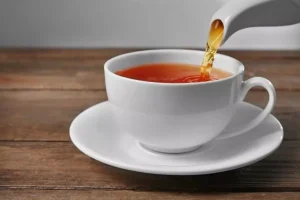
MyTeaPal é um aplicativo intuitivo que permite gerenciar suas infusões com precisão, mantendo um diário de chás, controlando tempos de preparo, organizando ingredientes e compartilhando experiências numa comunidade engajada.
Advantages of the Application
Brew Timer and Stopwatch
Allows you to precisely control the preparation time of each infusion, ensuring the ideal flavor and maximum use of the natural benefits of the ingredients.
Infusion Record and Diary
You can save notes, sensations, and results from each brew, creating a valuable history of which blends work best for your energy and focus.
Personalized Ingredient Catalog
Add details about the herbs, roots, and mixtures you use, creating an organized, easy-to-reference inventory.
Integrated Community
Share your recipes and experiences with other users, exchanging tips and discovering new ways to enhance your infusion routine.
Visual Statistics
Visualize your infusions and habits with graphs (such as pie charts and calendars), making it easier to understand your progress over time.
Synchronization between Devices
You can keep your history synchronized between your phone and tablet, tracking your progress wherever you are.
Advanced Customization
Use flavor tags, customize units of measurement (ml, °C, g, etc.), and use the randomizer to vary your choices.
Free and Ad-Free
The app is completely free, ad-free, and ideal for those looking for focus and convenience without interruptions.
Common questions
Yes, the app is completely free and ad-free, making it a clean and efficient option.
Yes, you can record as many infusions as you want, with notes, photos, tags and statistics.
Yes, there is secure data synchronization between platforms (such as mobile phones and tablets).
Yes! You can share logs, photos, and notes with other users within the app's community.
Yes, the brew timer and journal features work even offline.
Yes, you can set units such as ml, °C, g, spoons, among others.
Yes, the app has a randomizer function to help you choose infusions.
Yes, you can add photos to your journal entries to visually enhance your journal.
Yes, the official website provides contact information and support to users.

Temperature and time: the two numbers that change the flavor.
Those who record the brewing process in an app end up discovering the same thing: the problem is almost never the leaf, it's the water being too hot or the brewing time being too long. The leaf and the water are the same; the result changes because the extraction process changes.
The physical rule is simple. The hotter the water and the longer the contact time, the more compounds are released from the leaf. Caffeine and aromatic oils are released first. Tannins, which are astringent and bitter, are released later. Going too far means dragging the bitterness along with the aroma.
Tracks used for each type
- Green Tea: Water between 70°C and 80°C, for 1 to 3 minutes. It is the most sensitive of all; boiling water burns the leaf and the result is bitter from the first sip.
- White tea: Between 75°C and 85°C, for 2 to 5 minutes. Delicate flavor, tolerates longer cooking times than the green variety.
- Oolong: Steep between 85°C and 95°C for 3 to 5 minutes. Multiple infusions of the same leaf are acceptable.
- Black tea: Between 95°C and 100°C, for 3 to 5 minutes. Boiling water is welcome here.
- Pu-erh: Boiling water for 3 to 5 minutes, followed by a quick rinse before discarding the first water.
- Herbs in general (Chamomile, mint, fennel, hibiscus): Boiling water, 5 to 10 minutes, with the cup covered to avoid losing the aromatic steam.
Without a thermometer, you can gauge the temperature by observing the behavior of the water: small bubbles rising from the bottom are around 70°C to 80°C; a chain boil is near 90°C; a full boil is 100°C. Another method is to boil and wait. An open kettle will drop about 10°C in the first two minutes off the heat, in a normal environment.
Tea, infusion, and tisane are not the same thing.
Tea, strictly speaking, is made from Camellia sinensis. Green, white, oolong, black, and pu-erh all come from the same plant. What separates one from another is the processing: how much oxidation the leaf underwent after harvesting, whether it was heated to stop this process, whether it was rolled, pressed, or fermented.
Chamomile, mint, lemongrass, hibiscus, and fennel do not come from this plant. Technically, they are tisanes, or herbal infusions. The distinction is not a matter of pedantry: it explains why chamomile has no caffeine and green tea does, and why the herb can withstand boiling water while the green leaf cannot.
This is especially useful for those who use a tracking app: separating the two categories in your diary prevents you from drawing incorrect conclusions when trying to understand why you slept poorly one night and not another.
How much caffeine fits in a cup?
The amount varies depending on the leaf, the quantity used, the temperature, and the time. As a general guideline, in a cup of approximately 240 ml:
- Black tea: It usually ranges between 40 mg and 70 mg.
- Oolong tea: between 30 mg and 50 mg.
- Green Tea: between 20 mg and 45 mg.
- White tea: between 15 mg and 30 mg.
- Herbal teas: zero, except for those containing yerba mate or guarana.
- Filtered coffee, for comparison: It usually exceeds 80 mg in the same measurement.
Two practical details. First: decaffeinating at home by letting the tea steep for two minutes and then discarding the water doesn't work well, because a good portion of the caffeine only evaporates afterward. Second: the caffeine in tea comes with L-theanine, which is why many people report a more stable effect than with coffee. The total intake, however, remains the total intake—three cups of black coffee in the late afternoon can be quite substantial.
What the common sachet hides
Traditional tea bags are almost always filled with fine particles of broken leaves. A larger surface area means much faster extraction: the same time it would take to brew a whole leaf can be spent on a tea bag. Hence the common impression that "tea bags are always bitter".
Three adjustments solve a good part of it:
- Cut the time. If the packaging calls for 5 minutes, try 2 minutes and 30 seconds for black tea and 1 minute and 30 seconds for green tea.
- Do not press the tea bag against the cup. Squeezing removes precisely the tannins that remain in the most concentrated part.
- Cover. A saucer placed on top of the cup traps the volatile compounds, which are the aroma.
With whole leaves, the approach is the opposite: use more leaves, about 2-3 g for 200 ml, and give them space to open up. A tight infuser leaves half of the leaf without contact with the water.
Proper storage is more important than it seems.
Tea leaves are dry and porous, so they absorb everything around them. Four enemies can ruin the quality of a good package in just a few weeks:
- Light: Clear glass jars on the countertop accelerate degradation. Opt for opaque containers instead.
- Humidity: Putting a wet spoon inside the jar is the most common mistake. That's also why refrigerating it is a bad idea: when you take it out, the jar sweats on the inside.
- Heat: Storing it on top of the stove or next to the oven will gradually release its aroma.
- Strong smell: Placed near coffee, spices, or cleaning products, the leaf absorbs the surrounding odor.
Store in a sealed, opaque container in a cool cupboard, away from the stove. Green tea loses its aroma faster and is best consumed within a few months; black and pu-erh teas last much longer.
Recording has practical, not mystical, uses.
A preparation diary helps answer questions that memory can't answer: which sheet do you actually replace, what time of day do you drink the most caffeine, how long does a packet last, what time and temperature combination did you like best?.
This is consumer information, and nothing more. A tea app is not a health tool: it doesn't assess symptoms, doesn't replace professional advice, and shouldn't be used to decide on medication, pregnancy, or treatment. Some herbs interact with medications, and that's a conversation for a doctor or pharmacist, not a stopwatch.
Two notes are more valuable than all the others combined. The first is the time of your last caffeinated cup of the day, because that's the data point connected to sleep. The second is the rating you give each preparation, from one to five, along with the time and temperature used. After two weeks, the pattern emerges on its own: almost always, the high ratings are concentrated within a narrow time frame, and this frame is usually shorter than the one printed on the packaging.
If the goal is simply to keep track of time, a timer with a name will suffice. The app becomes worthwhile when you have more than three or four types of leaves at home, each requiring a different preparation, and you don't want to memorize any tables.