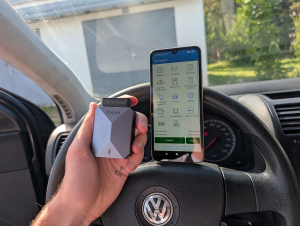
Anyone looking for a "blood pressure monitoring app for their phone" deserves a straightforward answer before any list: No app measures blood pressure on its own.. The phone doesn't have a sensor capable of calculating pressure through the camera, screen, or fingertip. What does exist, and works well, are apps that... they register and organize The readings are taken by a real blood pressure monitor — the kind you wear on your arm or wrist, with a cuff.
This type of app is useful precisely because a single number says little. Recording your blood pressure every day, at the same time, creates a history that a doctor can read at a glance. Instead of paper and pen, the app saves the date, time, values, and observations, and then creates graphs and reports. Below are five well-known apps for this purpose, with what each one does and what it doesn't do.
Before the list: what the cell phone can actually do
There are apps that promise to measure blood pressure by placing your finger on the camera or fingerprint reader. This result is not a blood pressure measurement: it's an unverified estimate, and treating that number as if it were real could prevent someone from seeking help when they need it. If an app promises this, be suspicious.
The honest way is this: you measure your blood pressure with a device (purchased at a pharmacy or health food store) and the app then saves the value. Some devices have Bluetooth and automatically send the reading to your phone; with others, you manually enter the numbers, which takes only a few seconds. Download any of these apps only from your device's official app store — Google Play on Android, App Store on iPhone.
Top Apps for Tracking Blood Pressure on Your Cell Phone
The apps below have similar purposes, but differ in the details: some work on any device, while others only make sense if you use a monitor from the same brand. It's worth checking the developer's name in the app store before installing, because similar names are common in this category.
SmartBP
O SmartBP It's one of the most widely used blood pressure diaries. You record the readings your device shows—systolic, diastolic, and pulse—and the app tracks the variation over the days, with graphs and a report that can be sent to your doctor. The interface is simple and requires no technical knowledge.
It also accepts data from compatible devices and mobile health platforms, saving you the need for manual data entry. This doesn't make the measurement "more accurate": accuracy comes from the blood pressure monitor, not the app. Some SmartBP features, such as advanced export, require in-app purchases.
Blood Pressure Monitor
Blood Pressure Monitor It's a name used by several different apps from different developers. The general idea is the same: to record blood pressure, pulse, and weight in one place and export everything in a report format for consultation. Since the name is repeated, check who published the app in the store and read the listing before installing.
The strong point of this family of apps is the reminders: you set the time and your phone notifies you when it's time to measure. Maintaining the routine at the same time every day is what gives value to the history. Many of them display ads and offer in-app purchases to unlock extra features.
Qardio
O Qardio It's the app that comes with the brand's own blood pressure monitors. When the device is from Qardio, the reading goes directly to the phone without typing, and the app combines blood pressure, heart rate, and other information into a single panel. Without the brand's device, it loses much of its purpose.
The interface is clean and easy to use, even for those unfamiliar with mobile phones. The feature to share the history with a family member or doctor is helpful for those caring for an elderly person remotely—remembering that the user themselves shares the history, using the device in hand.
iBP Blood Pressure
O iBP Blood Pressure It focuses on simplicity. You type in the reading, and it uses colors to show how that value compares to the reference ranges, making the variation easy to see without needing to interpret a graph. Readings can be separated by time of day—morning, afternoon, and evening—useful for those who measure more than once.
It also keeps a copy of the data in the cloud, so as not to lose the history when changing phones. It's worth repeating that the color classification is only a visual reference for the application: the doctor is the one who interprets the chart and decides on any course of action.
Health Mate
O Health Mate, The Withings blood pressure monitor is the app for the brand's devices. It doesn't measure anything on its own: the Withings arm monitor measures blood pressure, and the app receives the result and organizes it along with weight, heart rate, and sleep data, depending on the devices the person has.
It's a good option for those who already use the same brand's scale or watch and want everything on a single screen. Some of the monitoring, with more complete guidance and analysis, is available as an in-app purchase—and this guidance is general content about habits, not individual medical recommendations.
What do these apps actually do?
Aside from brand differences, the features that actually appear in these apps are these:
- Charts and trends: They show how the values have behaved in recent weeks, which helps to identify patterns that a single measurement might hide.
- Reminders and notifications: They give notice at the agreed time, so that the measurement always happens at the same time and the historical data is meaningful.
- Data sharing: They allow you to send your medical history to your doctor or a family member, either as a PDF or through the app itself.
- Connection to the device: When the monitor has Bluetooth, the reading is done automatically and you don't run the risk of typing incorrectly.
- Reports: They gather everything into a document to take to the appointment. The report is a summary of what you noted down—it doesn't make a diagnosis or recommend treatment.
FAQ
1. How do apps measure blood pressure? They don't measure. No app measures pressure using the camera, screen, or sensor of the phone. What the app does is store the value that was measured by a blood pressure monitor, entered by you, or sent by the device via Bluetooth.
2. Are these apps accurate? The accuracy depends on the device, not the app. A recording app simply repeats the number it receives. Use a blood pressure monitor in good condition, with a cuff that is the correct size for your arm, and follow the manufacturer's instructions.
3. Is it safe to use these apps? Recording your blood pressure using an app is not risky, as long as you install it from your phone's official app store and read how it handles your data. The risk arises when someone trusts an app that promises to measure blood pressure without any device.
4. Do I need an additional device to use these apps? Yes. You need a blood pressure monitor. If it has Bluetooth, the reading will automatically be sent to your phone; if not, you enter the values into the app.
5. Can I trust apps alone to monitor my health? No. These apps are for organizing information, and nothing more. They do not replace consultation, examination, or guidance from a healthcare professional. If your blood pressure is abnormal, or if you experience symptoms such as severe headache, chest pain, or shortness of breath, seek medical attention.
Conclusion
There is no app that measures blood pressure via cell phone, and anyone promising that is selling a fabricated number. What does exist are good recording apps: they save your blood pressure readings, compile a history, and transform months of notes into a report that the doctor can quickly read. Choose the one that matches your device, always measure at the same time, and bring the history to your appointment. That's the real use—and it remains a complement to medical monitoring, never a replacement.