Tracking investments has become part of the daily routine for those who want to make better decisions, reduce anxiety, and maintain discipline. With so many assets available (stocks, REITs, ETFs, fixed income, crypto, and even international investments), relying solely on manual notes or guesswork often leads to errors, oversights, and an incomplete view of your assets.
That's where investment tracking apps come in: they organize your portfolio, consolidate positions, show daily and historical variations, help you visualize risk and distribution by asset class, and can even send alerts about prices, news, and important events. Some focus on advanced analysis and charts; others are ideal for portfolio and performance control; and there are also those that simplify everything for beginners.
In this guide, you'll understand what really matters when choosing an app and which features make a difference in tracking your progress. The idea is simple: to help you gain clarity about what you have, how it's evolving, and what you need to adjust, without complication.
Advantages of Applications
Centralizing the portfolio in one place.
One of the biggest headaches for investors is having scattered assets: one brokerage for variable income, another for fixed income, an overseas account, a cryptocurrency portfolio, and sometimes even investments "sitting" in the bank. Good apps allow you to consolidate this information so you can see the complete picture of your assets. Instead of opening multiple platforms and manually adding up values, you can track everything in an organized way, with categories and filters. Result: Greater clarity and less chance of forgetting any asset when evaluating your strategy.
Realistic view of performance (profitability and growth)
Looking only at "how much it went up today" can be misleading. A tracking app shows performance over a period (month, year, total), profitability by asset and by class, and the evolution of your portfolio over time. This helps answer essential questions: Is my portfolio yielding more than the CDI rate? Is my variable income offsetting the risk? Which position is pulling the result down? When you see consolidated numbers, it becomes much easier to adjust contributions and rebalance consciously.
Visual risk control and diversification.
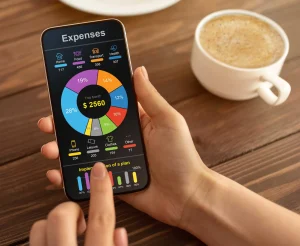
Diversification isn't about having "many assets," but rather about distributing them well across sectors, currencies, and investment types. Good apps show allocation charts (fixed income vs. variable income, Brazil vs. abroad, sectors, currencies, etc.), and some even highlight excessive concentration in a single asset. This visual view helps to understand risk practically, without complex spreadsheets. With this, you can decide whether it makes sense to increase cash, protect with fixed income, or reduce exposure to something that has become too large in your portfolio.
Price alerts, news and important events
For those who follow the market, alerts are invaluable. Many apps allow you to set notifications when an asset reaches a certain price, when there's a strong rise/fall during the day, or when relevant news is released. This avoids constantly checking prices and helps you act objectively. In addition, some apps organize events such as... dividends, interest on capital, payment dates It is dates with — points that make a difference for those seeking income and wanting to plan their cash flow.
Analyses, indicators, and comparisons for better decisions.
If you like to analyze before buying (or selling), there are apps focused on charts and technical indicators, as well as apps focused on fundamentals (multiples, profits, growth, debt, dividend history). The most interesting thing is being able to compare assets and understand the context. Is this price expensive or cheap considering the historical data? What similar alternative exists? How has this asset performed during crises? Even those who invest for the long term benefit, because it avoids impulse purchases and improves the timing of investments.
Automation and data import (less manual work)
Typing in every purchase, sale, fee, and dividend can be tedious. That's why many prefer apps that allow importing notes, integration with brokers (when available), or at least a quick and intelligent registration process. The less friction, the greater the chance you'll keep track of everything. Outdated tracking leads to incorrect conclusions, so automation becomes a key differentiator. When the app facilitates updates, you truly keep track, without it becoming "just another task" in your routine.
Monitoring by objectives (goals and deadlines)
Investing without a goal is like traveling without a destination. Some apps allow you to create goals (emergency fund, buying a property, retirement, travel, studies) and track how much is left to reach them. This improves financial behavior because you start investing with purpose and clear deadlines. Furthermore, goals help define... risk profile It is liquidityShort-term money demands security; long-term money can withstand fluctuations.
Reports and organization for tax and personal control.
Even if the app doesn't replace an accountant, it can organize information that is very helpful: transaction history, average price, dividends received, and portfolio evolution. For those who invest in variable income, having this structured avoids headaches when reviewing operations and separating data. And, even outside the context of taxes, reports are useful for maintaining discipline: you can see where you are investing, which positions are growing the most, and where there are "leaks" (fees, recurring losses, concentration, etc.).
Recommended apps (by usage profile)
Instead of choosing "the most famous," think about your goal. Below are popular and well-known options, separated by profile — so you can choose what makes sense for your tracking style:
- For portfolio control (Brazil): apps like Kinvo, Status Invest It is Trademap These apps are usually sought by those who want to track market positions, performance, and information in Portuguese, focusing on local assets (stocks, REITs, ETFs, and fixed income, depending on the app/version).
- For global market information and news: Investing.com It is Yahoo Finance They are widely used to track stock prices, news, the economic calendar, and to create asset lists, including international markets.
- For charts and technical analysis: TradingView It is a reference for those who like indicators, chart patterns, alerts, and tracking price movements in various markets.
- For cryptocurrencies: apps like CoinMarketCap It is CoinGecko They help monitor prices, variations, rankings, as well as create watchlists and track industry trends.
- For those who want simplicity: If you're just starting out, prioritize apps with an intuitive interface, quick wallet registration, simple charts, and basic alerts. The "best" app is the one you'll actually use consistently.
Practical tip: if possible, use two types of appone for Portfolio/performance management and another for analysis and alerts. This way you separate "monitoring" from "deciding," avoiding noise and excessive anxiety.
Common questions
It depends on your goal. If you want portfolio control, Prioritize apps that consolidate assets and demonstrate performance. If you are looking for... analysis, Prefer apps with charts, indicators, and alerts. The best one is the one that combines useful features with ease of use so you can stay updated.
In general, it is safe to register. basic information Regarding your portfolio (assets and quantities), avoid entering brokerage passwords anywhere other than the institution's official app. When there is integration, check permissions, reputation, and privacy policies. If you want maximum caution, use manual registration.
For most people, no. Monitoring daily can increase anxiety and lead to impulsive decisions. A good balance is to review. Once a week (or every two weeks) and do a more thorough review monthly to check targets, contributions, and rebalancing.
Search for: easy registration, clear vision of allocation It is profitability, Support for the assets you use (stocks, REITs, ETFs, fixed income, crypto), possibility of register earnings and simple reports. If you invest abroad, check if the app supports international currencies and exchanges.
Some apps organize historical data, average price, and dividends, which is very helpful, but they don't always replace a specialized service. Use the app as... support To keep data organized and reduce errors, and to confirm rules and obligations with official or professional sources when necessary.
Track portfolio It's about seeing how much you have, how it's distributed, and how it's performing. Analysis It involves studying assets (fundamentals, charts, news, market scenario) to make buy and sell decisions. Ideally, these routines should be kept separate to avoid emotional decisions based on daily fluctuations.
Yes, if it meets your needs well. But many people prefer to use... a wallet app (organization and performance) and a market app (alerts, news and analysis). This provides more focus and avoids information overload in one place.
The essentials: consolidated portfolio, allocation by class, profitability per period, historical, alerts (If you track prices) and an interface that facilitates updates. If the app is complicated, you'll abandon it — and then you lose the main benefit: consistency.
In conclusion: Tracking investments with apps isn't about "checking quotes all the time," but rather about having vision, routine, and more rational decisions. Choose a tool you enjoy using, keep your portfolio updated, and create a simple review ritual. With consistency, you gain clarity, reduce noise, and invest with much more confidence.